What Happens When You Miss a Life Insurance Premium Payment?
It happens. You switch bank accounts and forget about autopay, or a tight month means something has to wait, or maybe the bill just gets lost. Missing a payment doesn't mean your coverage is gone instantly. You just need to move quickly.
Here is how it plays out, step by step.
Day 1: You Miss the Payment
Your due date passed and the money didn't move. Don't sweat it yet. Your coverage is still active. Usually, the insurance company tries the payment again after a few days. If that works, you're fine. If it fails, the grace period begins.
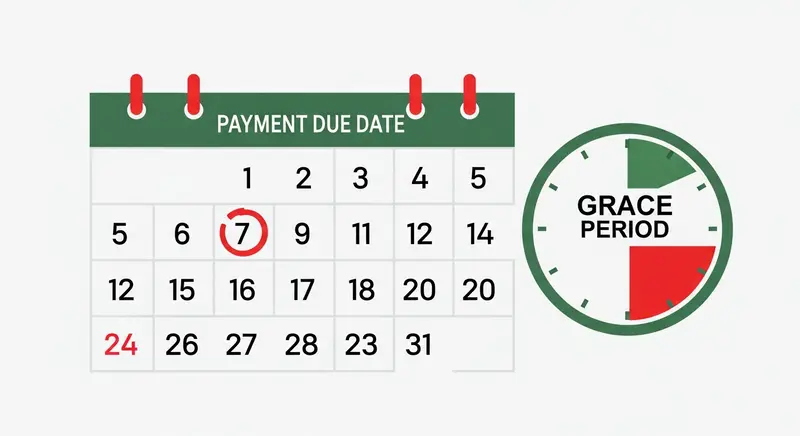
Days 1 to 30 (or 31): The Grace Period
Every policy has this—it is required by state law. It lasts 30 or 31 days.
During this time:
- Your coverage stays fully active.
- If you die, they still pay the death benefit, minus the unpaid premium.
- You can just pay what you owe to get back to normal.
- Most carriers don't charge late fees, though some have a tiny admin fee.
- There's no penalty to the policy itself.
Just pay the missed amount as soon as you can. Call them, log in, and fix your autopay if it's broken.
Day 31 and Beyond: The Policy Lapses
If you don't pay by the end of the grace period, the policy lapses. This is the bad part.
What a lapse means:
- Coverage ends. If you die after this, your family gets nothing.
- You aren't insured.
- You'll get a notice from the company saying it's lapsed.
For term life: It's just cancelled. Nothing back, no cash, it's done.
For whole life: It's a bit different. If you have cash value, the company might do one of these things:
- Automatic premium loan (APL). They borrow from your cash value to pay the premium. Coverage stays on, but your cash value drops and you owe interest on that loan. It buys time, but it's not a permanent fix.
- Extended term insurance. They use your cash value to buy a term policy for the same amount. It lasts as long as the cash value covers it.
- Reduced paid-up insurance. They swap your policy for a smaller one that's fully paid up. You never pay another premium, but the death benefit is permanently smaller.
Check your docs to see what your carrier does.
The Reinstatement Window
Good news: if you lapse, you usually get a 3 to 5 year window to reinstate.
To get it back:
- Pay all missed premiums plus interest.
- Fill out a health questionnaire or do a medical exam to show you're still insurable.
- Send in a reinstatement application.
Reinstating is usually better than buying new because:
- You keep your original issue age, keeping rates lower.
- You skip a new contestability period.
- It's less paperwork than a new application.
- If your health got worse, your old rates are still based on your younger self.
Example: Tom was 48, had a 20 year policy from age 40. Lapsed for 3 months. To reinstate, he paid 3 months ($120) plus $8 interest and did a health check. Took 2 weeks. A new policy at 48 would have cost 40% more.
The Contestability Period Risk
When you reinstate, some carriers reset the two year contestability period. During this time, they can deny a claim if you misrepresented anything on your reinstatement paperwork.
Basically, be 100% honest on that health questionnaire. If you lie and pass away within two years, they will check your records and might deny the claim.
How to Prevent Missed Payments
- Set up autopay. The easiest fix. Use bank drafts or credit cards.
- Use phone reminders. Set them for a week before the due date if you pay manually.
- Choose the right frequency. Monthly, quarterly, semi-annual, or annual. Sometimes you get a discount for annual.
- Update info immediately when you get a new card or bank account.
- Keep your contact info current so they can reach you.
What If You Can Not Afford the Premiums Anymore?
If you're thinking of letting it lapse on purpose, try these:
- Reduce your coverage amount to lower the premium.
- Switch to a shorter term length.
- Ask about a 'premium holiday' if you have a whole life policy with cash value.
- Look into a 1035 exchange to swap for a cheaper policy.
- Call your agent. They can help you figure out options.
The Real Cost of Letting a Policy Lapse
- Immediate: No coverage. Family gets nothing.
- Short-term: If you reapply, you're older, so rates go up.
- Long-term: If your health changed, you might be uninsurable or pay way more.
A 35 year old who lapses and reapplies at 40 might pay 40-60% more. At 50, that jump could be 200%.
MyMesi Can Help You Stay Covered
Missing a payment isn't the end of the world. If you're dealing with a lapse or need cheaper coverage, reach out. We work with carriers in all 50 states to help you get back on track.