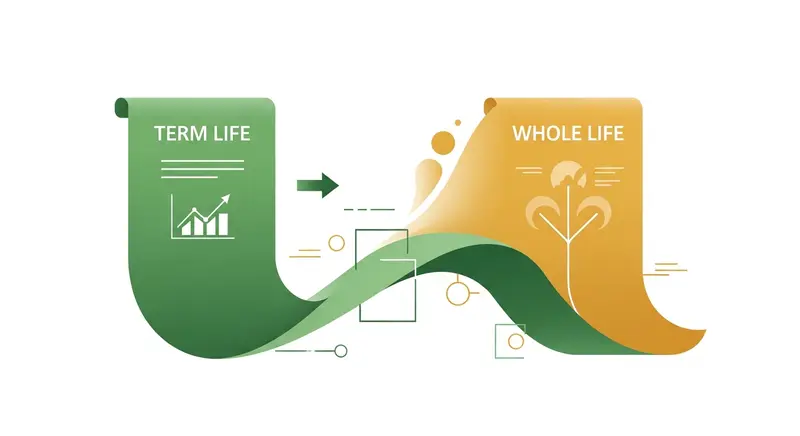
Converting Term to Whole Life: When It Makes Sense and When It Does Not
Most term life policies have a "conversion option" hidden in the fine print. It lets you switch to a whole life policy without having to do a new medical exam. This is a massive perk, but most people don't know it exists or how it works. At MyMesi, we think you should know what you have. Let's break down when to use it and when to skip it.
What Is a Conversion Option?
It is basically a safety net. You can flip some or all of your term coverage into a permanent (whole life) policy. The best part? No health questions. No exams. Even if you've been diagnosed with something serious since you bought your original policy, you can still switch over. That is why this matters—health changes, and this is your backup plan.
How Conversion Pricing Works
Here is where it stings. When you convert, your new price is based on your age *now*, not when you bought the policy. A 45-year-old paying 45-year-old rates is way different than paying 30-year-old rates. Whole life is already pricier than term, so expect a jump. But, if your health means you can't get new insurance anywhere else, paying more is a whole lot better than having no coverage at all.
The Conversion Deadline Is Real
Every policy has an expiration date for this option. It might be a specific age like 65, or it might be just the first 10 or 15 years of your term. Once that deadline passes, the door closes. Check your policy today. Don't wait until you're already facing a health issue to find out you missed the window.
When Converting Makes Sense
- Your health changed: If you've got a diagnosis that makes you uninsurable, this is your golden ticket. You can lock in coverage regardless of what happened to your health.
- You still need protection: If your term is ending but you still have people relying on you or big financial obligations, converting keeps the safety net in place.
- You want permanent coverage: Some people just want a policy that lasts forever, no matter what.
- You want to scale back: You don't have to convert everything. Maybe you convert $100k to cover final expenses and let the rest of your term drop. It helps keep the premiums manageable.
When Converting Does Not Make Sense
- You are still healthy: If you are in good shape, shop the market. You can likely find a brand-new term or whole life policy for way less than a conversion would cost.
- You don't need it forever: If the kids are grown and the house is paid off, you might not need insurance anymore. Don't throw money at a permanent policy if you don't need it.
- It is too expensive: If the new premiums break your budget, don't do it. Look for a smaller policy or rethink your goals.
- You missed the deadline: If the window is closed, it is closed. Time to look at other options.
A Smart Conversion Strategy
Don't think in all-or-nothing terms. If you have $500k in coverage, you can convert $200k to permanent and let the rest go. It helps you keep some permanent protection without the massive price tag of converting the whole thing.
Real Example
Marcus was 32 when he got a $750k term policy for $38/month. At 44, he got Type 2 diabetes. His conversion window closes at 47. He can convert $200k to whole life for about $280/month to guarantee he has something, while keeping his term for the rest until it expires at 52. He’s paying about $318 total—pricier, but he couldn't get a new policy anywhere else because of the diabetes.
Check Your Policy Today
Find out three things: Does it have a conversion option? When is the deadline? What can I convert to? Even if you never use it, knowing it's there is huge for your peace of mind. MyMesi works with top carriers that have great conversion options. If you need a new policy with a good window or want to explore converting what you have, reach out. We can get you a quote in 2 minutes.