Life Insurance for People Who Work Dangerous Jobs
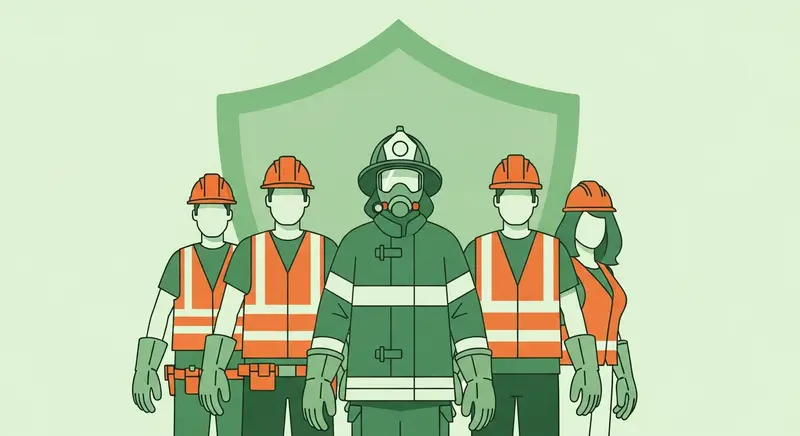
If you work in construction, trucking, oil and gas, law enforcement, or firefighting, you already know the risks. What you might not know is how those jobs affect your life insurance premiums. Spoiler: It doesn't mean you can't get coverage. At MyMesi, we work with carriers across the country, and some are way more friendly to trade workers and first responders than others. Let's talk about how this works.
How Your Job Affects Your Life Insurance Rate
Insurance companies are all about math. If your job has more risk, you are going to pay a bit more. That is just how it goes. But "higher" does not mean "out of reach." It just means you have to be more selective.
Compared to a desk worker, here is how the extra risk can look:
- Construction/Firefighters: 25% to 75% higher
- Truckers/Police: 25% to 50% higher
- Oil rigs/Roofers: 50% to 100% higher
- Loggers/Fishers: 75% to 150% higher
These ranges exist because every insurance company has their own secret sauce for calculating risk. Shopping around is the only way to find who gives you the best deal.
Real Numbers for High-Risk Workers
Let’s look at a 35-year-old non-smoking guy wanting a $500k, 20-year term policy:
- Office worker: $25–$35/month
- Construction/Firefighter: $35–$55/month
- Trucker/Police: $35–$50/month
- Oil rig/Roofer: $50–$70/month
Yes, you pay more. But we are talking about the price of a few lunches. That small extra cost is worth it so your family can keep the house and pay the bills if something happens. Because the bills don't stop.
Which Carriers Are Friendlier?
Some companies specialize. Some love tradespeople. Some are great for police and fire. Some won't even look at your application if you mention certain heights or heavy machinery. This is why you need an independent agent like MyMesi. We shop your profile to the carriers that actually want your business.
What Carriers Ask About Your Job
Expect some questions:
- The specifics: "Construction" is vague. A project manager sits in a trailer, while a framer is on the roof. Tell them exactly what you do.
- Time spent on tasks: Do you handle the dangerous stuff 10% of the time or 90%? It matters.
- Safety records: Did you have any accidents? If you have good safety training, highlight it.
- Heights and chemicals: If you work above 30 feet or handle toxic stuff, be honest.
Be clear. If you undersell your safety habits, you'll pay more than you need to.
Tips for Getting the Best Rate
- Be precise: If you're an electrician who never goes above 15 feet, make sure that's clear so you aren't priced like a high-voltage lineman.
- Highlight training: Safety certs look good to underwriters.
- Shop around: Different carriers have different appetites for risk.
- Think about the term: If you are going to switch to a desk job in 10 years, maybe a 10-year term is enough for now.
- Don't skip it: A little extra cost for peace of mind is worth it.
What About Employer Coverage?
If your job offers life insurance, take it. It is usually cheap or free. But don't rely on it as your only plan. It usually doesn't pay out enough, it vanishes if you quit or get laid off, and you can't customize it. Think of it as a nice extra, not your main plan.
Changing Jobs and Your Policy
Here is a cool perk: Once you have a term life policy, the rate is locked in. If you start as a roofer and switch to an office job five years later, your rate stays the same. The insurance company can't raise your rates just because you changed jobs, and they can't lower them either—you have that locked-in rate for the duration of the term.
MyMesi Works With High-Risk Workers Every Day
We know your job is tough. You shouldn't have to work hard to get your family protected, too. We work with carriers across all 50 states that know how to handle high-risk occupations. Get a free quote in 2 minutes and let us do the shopping for you.